Cybersecurity in Logistics 2026: Risks, NIS2, Fraud Detection

Piero Bassa
Founder & CEO
 Claude
  Perplexity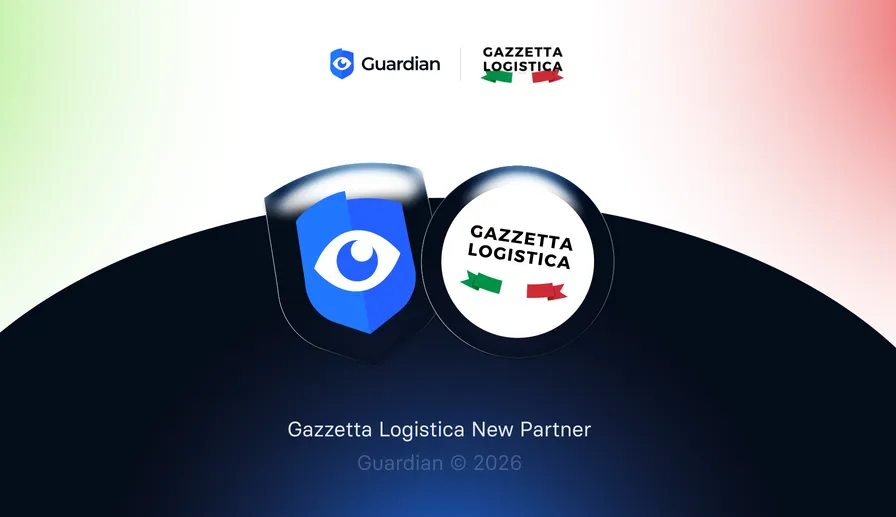
ENISA data consistently places transport and logistics among the top five European sectors hit by cybersecurity incidents, with double-digit growth in ransomware attacks over the past two years. Digitization brought efficiency, traceability, and new services. It also multiplied the entry points for anyone looking to halt operations, steal data, or defraud price lists and partner discounts.
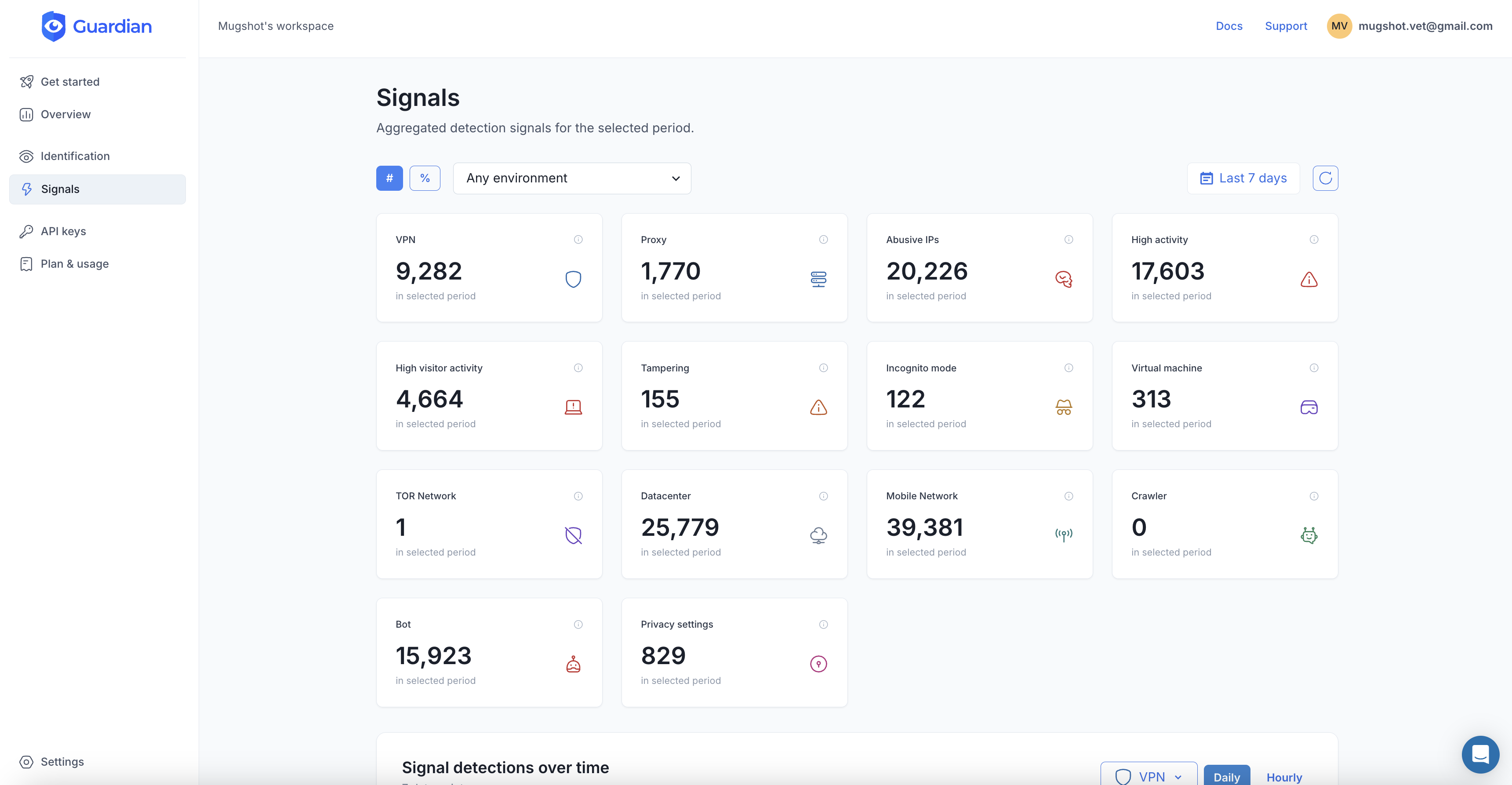
This is the context for the partnership between GuardianStack, Gazzetta Logistica, and Logistica IT: an alliance between a device intelligence and fraud detection platform and two reference media outlets for the Italian logistics sector.
A strategic partnership for Italian digital logistics
Logistics is no longer a “physical” sector with some IT systems on the side. It is a deeply digital ecosystem where every hour of downtime translates into penalties, lost customers, and broken SLAs. Cybersecurity cannot be treated as an accessory topic. It has to be part of business strategy.
Gazzetta Logistica and Logistica IT are two editorial reference points for professionals, companies, and operators in the sector. Through articles, in-depth features, video content, and collaborations with major events, the two outlets feed a high-quality information ecosystem. GuardianStack brings to this ecosystem a platform natively built for device identification and digital fraud prevention, delivered via API and already used by companies running online customer portals, apps, and B2B integrations.
The goal of the collaboration is direct: deliver concrete value to logistics companies by combining quality information with advanced technology solutions, helping them navigate digital transformation securely.
Why logistics is now a priority target
The sector has gone through a deep transformation in a handful of years. Three factors in particular have significantly expanded the attack surface.
WMS, TMS, and ERP: three systems, one attack surface
Warehouse management (WMS), transport management (TMS), and enterprise resource planning (ERP) systems no longer live in isolation. They are interconnected with each other, exposed to external users (shippers, customers, carriers) through web portals, and integrated via API with marketplaces, e-commerce platforms, and tracking systems.
A single compromised credential on a shipper portal can open the door to far more than a single order. If the portal is integrated with the TMS, and the TMS talks to the WMS, a patient attacker can move laterally, map the supply chain, and strike where it hurts most. The same logic applies to API tokens and automated integrations. A stolen access token or a compromised device becomes leverage to reach critical systems.
E-commerce, marketplaces, and integrations: risks multiply
Modern logistics serves e-commerce and is served by B2B marketplaces, online price lists, partner portals, and self-service systems. Every portal is, by definition, exposed on the internet and therefore exposed to:
- Automated price-list scraping by competitors or intermediaries, eroding the competitive edge built on pricing.
- Account takeover on customer and shipper portals, often through credential stuffing using passwords stolen elsewhere.
- Multi-accounting to abuse reserved discounts, first-shipment promotions, or minimum-volume deals.
- Identity fraud during onboarding of new B2B customers, with falsified or reused corporate data.
These are not theoretical attacks. They are patterns documented in leading industry reports, including Imperva’s Bad Bot Report, which year after year lists logistics and travel among the sectors most affected by malicious automated traffic.
Automation and AI: new scenarios
Process automation and the growing use of artificial intelligence have opened new scenarios. AI agents are increasingly capable of navigating portals, filling forms, and interacting with APIs. Some do it for legitimate purposes, like authorized price comparison. Others are used to saturate booking systems, test credentials, and map non-public endpoints.
Traditional defenses (CAPTCHAs, rate limiting, IP blocks) were designed against primitive bots. Against modern agents running on real browsers, residential proxies, and physically distributed hardware, these defenses offer marginal protection.
Concrete risks for logistics companies
Translated into business impact, the growing digital surface brings four categories of risk that every operations director should keep on the dashboard.
1. Ransomware and operational disruption. An attack that locks a WMS for 24 hours can cripple an entire national supply chain. ENISA data and reports from leading incident response firms put logistics among the most targeted sectors, with growing average ransoms and recovery times exceeding a week in many documented cases.
2. Data compromise and exfiltration. Customer data, reserved price lists, shipment flows, routing information. Logistics moves sensitive information with enormous competitive value. Exfiltration brings contractual, regulatory, and reputational consequences.
3. Digital fraud on portals and integrations. Account takeover, promotion abuse, creation of fraudulent profiles, manipulation of discount codes. These are silent phenomena that erode margins without showing up on traditional operational dashboards.
4. Regulatory non-compliance. Since 2024 the NIS2 Directive changed the rules of the game. Being unable to demonstrate adequate controls is no longer just a technical risk. It is a direct legal and financial risk.
NIS2 and logistics: what companies must do by 2026
EU Directive 2022/2555, better known as NIS2, has been in force since October 17, 2024. Italy transposed it with Legislative Decree 138/2024, designating the National Cybersecurity Agency (ACN) as the competent authority for registration, supervision, and enforcement.
Logistics is fully involved. Annex I of the Directive lists the transport sector (air, rail, road, and water) among the high-criticality sectors. The following are automatically in scope:
- Medium companies (50-250 employees or EUR 10M-50M turnover).
- Large companies (over 250 employees or over EUR 50M turnover).
This is not voluntary. There is no opt-in process: if a company meets the criteria, it is in scope and already has obligations to meet today.
Article 21 of the Directive defines 10 minimum risk management measures that must be implemented and, most importantly, demonstrable. For digital logistics, the following are particularly relevant:
- Risk analysis and information system security policies.
- Incident handling, with a 24-hour notification requirement from detection.
- Supply chain and digital vendor security.
- Access control and multi-factor or continuous authentication.
- Periodic effectiveness assessment of the measures.
Fines reach EUR 10 million or 2% of global annual turnover for essential entities, with direct management liability and possible suspension of authorizations. For a detailed operational guide, we published a complete checklist on the 10 NIS2 measures.
The regulatory message is sharp: paper policies are not enough. You need evidence, logs, dashboards, and proof of continuous control.
From passwords to devices: why device intelligence matters
Most attacks against logistics portals, B2B marketplaces, and integrations do not exploit exotic code vulnerabilities. They exploit the weakest link: user identity. Stolen, shared, or credential-stuffed passwords, or accounts created ad hoc to commit fraud.
Defense based only on passwords and traditional MFA has structural limits:
- Passwords get stolen (phishing, third-party data breaches).
- SMS-based MFA gets bypassed via SIM swap and social engineering.
- Legitimate credentials can be used from unauthorized devices.
Device intelligence shifts the perspective. Instead of trusting only the credential, you identify the device that is using it. A device that has always logged in from a consistent geography, with stable hardware and software, is a trust signal. An unknown device, with emulation hints or a bad reputation, is a risk signal. All this without asking anything of the legitimate user.
Fraud detection via API
Fraud detection via API is an integration model where the detection logic does not live inside every single application but is centralized in an external service called via API. The practical benefits for logistics are direct:
- Fast integration into existing portals without rewriting the backend.
- Uniform coverage across WMS, TMS, customer portal, and shipper area.
- Continuous updates to detection models without redeploying operational systems.
- Centralized logs usable as NIS2 compliance evidence.
How GuardianStack protects portals, apps, and integrations
GuardianStack is a device intelligence and fraud detection platform delivered via API. The approach is invisible to the end user and fast for the developer.
Integration is designed to be quick. A lightweight JavaScript SDK on the page collects device and browser signals client-side, and the backend calls the GuardianStack API to retrieve a risk score before completing authentication or accepting an order. In practice, a typical logistics portal can be covered in a few hours.
Two integration patterns map almost one-to-one onto the most common logistics use cases:
- Account takeover prevention on shipper portals and customer areas, to verify that every login comes from a trusted device rather than from a stolen credential.
- New account fraud prevention on onboarding flows, to block fake B2B customers, multi-accounting on reserved discounts, and identity-level abuse during signup.
The collected signals include over 70 technical characteristics of the device and browser, behavioral analysis, IP reputation, geographic consistency, and more. The result is persistent device identification across sessions, without relying on third-party cookies or user action.
For logistics, that means being able to:
- Identify every shipper and every customer accessing the portal, distinguishing between known and new devices.
- Detect scraping bots harvesting price lists and tariffs, even when they run on real browsers behind residential proxies.
- Spot multi-accounting that abuses reserved discounts, by correlating devices across different profiles.
- Stop account takeover in real time, comparing the current device to the account’s access history.
- Produce auditable logs useful to prove NIS2 controls on risk analysis, incident handling, access, and continuous authentication.
Concrete initiatives from the partnership
The collaboration between GuardianStack, Gazzetta Logistica, and Logistica IT translates into a set of initiatives focused on informing, training, and supporting companies in the sector:
- Editorial content dedicated to digital security in logistics, published on the partner portals.
- Technical deep dives on risks, use cases, and concrete solutions for companies of any size.
- Webinars on operational cybersecurity and NIS2 compliance.
- Visibility for innovations that are reshaping the sector.
- Support for the cultural growth of Italian companies, with operational language that goes beyond pure tech speak.
GuardianStack joins the ecosystem of partner companies of Gazzetta Logistica and Logistica IT, contributing to a network of competencies increasingly oriented toward innovation and digital resilience.
A look ahead: secure logistics starts with devices
The logistics of the future will be increasingly digital, automated, and interconnected. More integrations, more AI agents, more endpoints exposed on the internet. In this scenario, security is not an optional cost. It is a competitive factor.
Thanks to the collaboration between GuardianStack, Gazzetta Logistica, and Logistica IT, companies in the sector can rely on three complementary levers:
- Valuable content to stay current on risks, regulations, and best practices.
- Concrete tools to protect portals, apps, and integrations without adding friction.
- A professional network oriented toward innovation, compliance, and operational sustainability.
The partnership is a meaningful step toward safer, more aware, and technologically mature logistics. It puts real company needs at the center and offers answers that speak the language of IT leaders, operations directors, and executives alike.
If you operate in logistics and want to understand how to protect your portals, apps, and integrations from digital fraud and identity-based attacks, this is the right moment to start. The future of logistics also runs through data protection and the ability to prove, at any moment, that your systems are under control.
Try GuardianStack for free or talk to our team to see how device intelligence and fraud detection can be integrated into your logistics portals.
Frequently asked questions
Why is logistics such a high-priority target for cyberattacks?
Does the NIS2 Directive apply to logistics companies?
What is device intelligence and how does it help logistics?
What penalties does NIS2 impose on non-compliant companies?
How can I start protecting my logistics portal?

Related articles
· 9 min read
AI Business Command Centers in 2026: Security, NIS2, and Risks
AI-powered business command centers unify CRM, ticketing, HR, and ops. GuardianStack partners with Graphoid to secure portals across EU and India.

· 11 min read
Deepfakes vs. Gambling KYC: Why Identity Checks Are Failing
Deepfake fraud in gambling grew 700% in one year. Learn why KYC alone cannot stop identity fraud and how device intelligence fills the gap.
· 12 min read
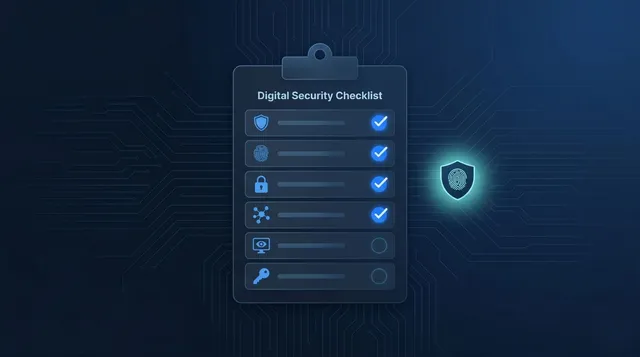
NIS2 Compliance Checklist: 10 Measures You Need in 2026
A practical NIS2 compliance checklist mapping Article 21's 10 cybersecurity measures to concrete actions. Includes audit preparation and reporting timelines.